
What Makes Learning Unforgettable for Children?

Stories as lessons and their Emotional Impact:
When learning is connected with a child’s emotions, it leaves a long lasting impression on their minds, transforming facts into vibrant experiences. Kids love stories. If you teach them something in the form of a story, it is not boring for them. Such emotional investment acts as an anchor, helping children remember not only the information but also the feelings attached to their experiences. When educators connect learning to emotions, they can create lasting memories that fuel curiosity, empathy, and a deeper understanding of the subject matter. This turns education into an engaging journey rather than a series of rote lessons.
Importance of having a hands-on learning experience:
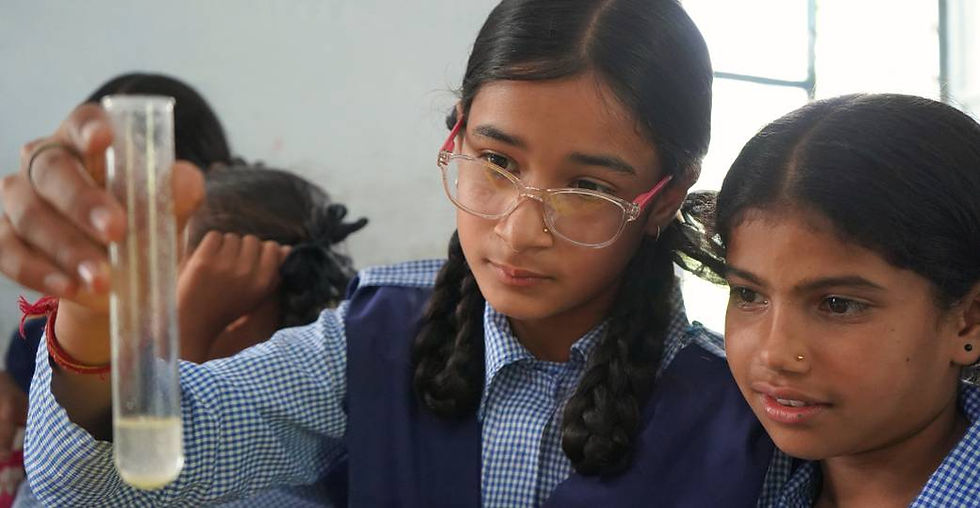
For a child, understanding is rarely born from just listening; it is embedded through hands-on learning experiences, understanding, and applying concepts to solve real-world problems. Active learning shifts the student from a listener to an applier, transforming monotonous lessons into an immersive learning experience. When children apply what they have learnt, they start to develop analytical skills useful in everyday activities. By encouraging students to experiment, make mistakes, and innovate, we help them develop an understanding of how things work rather than having to recall facts by just listening.

A world experienced through our senses:
The world is learned through the senses, and learning is unforgettable when it is learned through sight, sound, texture, and even smell. Vibrant classrooms, muddy outdoor gardens, or science labs create immersive experiences that cannot be reached by textbook pages. When a child can hear the crackle of a reaction, feel the texture of a historical artifact, or see a concept through vivid imagery, they are experiencing learning in a way that sitting in a classroom can never reach. This sensory approach stands out in sharp relief against the background noise of everyday life and makes the learning experience memorable.
Games + Education = New take on the world:
Play is the language of childhood, and combining it with education creates an unknown level of motivation and concentration. Gamification is not about making education trivia-based, but using challenges, immediate feedback, and rewarding milestones to keep children engaged with difficult tasks. Purposeful play replaces the fear of failure with the excitement of another “try,” building academic resilience and a healthy approach to obstacles. When learning is presented as a quest or an exploration, teachers can turn difficult practice into an exciting and memorable adventure that will be thoroughly enjoyed by students.
Learning through team work and social interactions:
Since people are social creatures by nature and learn best in the presence of other learners, gaining information is not meant to be an isolated activity. Children learn much more in social environments where they must debate problems, share opinions, and cooperate to achieve a shared and imaginative goal. A child's understanding of his or her subject matter grows significantly clearer and more enduring through teaching another student about something, arguing for or against a certain point of view, or working on group projects.
Written By: Manya, 9th Grade

